

Smart Material Sensor for Structural Health Monitoring
Abstract
Abstract
Google Meet Link : https://meet.google.com/wuy-wmuk-ivd
Team Members
Mentors
▸ Anagha Tanmayee Sripathi (241MT001)
▸ Anaswara Prakashan (241MT004)
Mentee
▸ Taiyyab Ahmad (251ME359)
Introduction
Structural Health Monitoring (SHM) is an important field in engineering that focuses on evaluating the condition of structures and identifying damage before catastrophic failure occurs. Modern engineering structures such as bridges, aircraft components, buildings, and industrial machinery are continuously subjected to mechanical loading, vibrations, fatigue, and environmental effects, which can lead to the development of cracks or structural degradation over time. Early detection of such defects is essential to improve safety, reduce maintenance costs, and extend the operational life of structures.
Traditional SHM systems commonly rely on physical sensors such as strain gauges, accelerometers, and vibration monitoring devices installed at multiple locations on a structure. Although effective, these systems can become expensive, complex, and difficult to maintain for large-scale applications. To overcome these limitations, simulation-based approaches using virtual sensors have gained significant attention in recent years. Virtual sensors use numerical simulation data to replicate the behaviour of physical sensors, enabling damage detection without the need for extensive hardware implementation.
In this project, a simulation-based SHM methodology is developed using a cantilever beam model. The geometry of the beam is created in Autodesk Fusion 360 and imported into ANSYS Workbench for finite element analysis (FEA). Different damage scenarios are introduced by creating cracks. Static structural analysis is performed to evaluate stress, strain, and deformation behaviour, while modal analysis is carried out to study changes in natural frequencies and mode shapes due to damage.
A virtual sensor network is implemented by selecting specific points along the beam and recording strain values from the simulation results. Variations in strain distribution and natural frequencies are then compared between healthy and damaged conditions to identify the location and severity of damage. By combining static and modal analysis, this project demonstrates an effective and simplified approach for structural health monitoring using virtual sensing techniques.
The study highlights the potential of integrating CAD modelling, finite element analysis, and vibration-based monitoring methods for practical SHM applications. The methodology developed in this project can further serve as a foundation for advanced SHM systems involving real-time monitoring, machine learning, and smart sensor integration.
Objectives
- To understand the principles and importance of Structural Health Monitoring (SHM) in engineering applications.
- To develop a 3D CAD model of a cantilever beam using Autodesk Fusion 360.
- To perform finite element simulations using ANSYS Workbench for structural analysis.
- To create multiple damage scenarios by introducing cracks at different locations along the beam.
- To implement a virtual sensor network using strain values extracted from simulation results.
- To study the effect of structural damage on stress, strain, and deformation behaviour.
- To perform modal analysis and evaluate changes in natural frequencies and mode shapes due to damage.
- To compare the behaviour of healthy and damaged beam models for effective damage detection and localization.
- To analyze the influence of crack position on the structural response of the cantilever beam.
- To demonstrate a simplified and cost-effective simulation-based approach for Structural Health Monitoring using combined static and modal analysis techniques.
Theory
Structural Health Monitoring (SHM)
Structural Health Monitoring (SHM) refers to the process of continuously observing and evaluating the condition of a structure to identify the presence of damage or deterioration. SHM systems help in improving structural reliability, reducing maintenance costs, and preventing sudden failures. Damage in structures generally alters their stiffness, mass distribution, and dynamic characteristics, which can be detected through changes in stress distribution, strain response, vibration patterns, and natural frequencies.
In this project, SHM is performed using a simulation-based approach where strain data and vibration characteristics are extracted from finite element simulations instead of physical sensors.
Finite Element Method (FEM)
The Finite Element Method (FEM) is a numerical technique used to solve complex engineering problems involving stress, strain, deformation, and vibrations. In FEM, a continuous structure is divided into smaller elements connected through nodes, forming a mesh. Mathematical equations governing each element are assembled to obtain the overall response of the structure.
The cantilever beam used in this project is discretized into finite elements in ANSYS Workbench. FEM enables accurate prediction of structural behaviour under applied loads and boundary conditions, making it highly suitable for structural health monitoring studies.
Static Structural Analysis
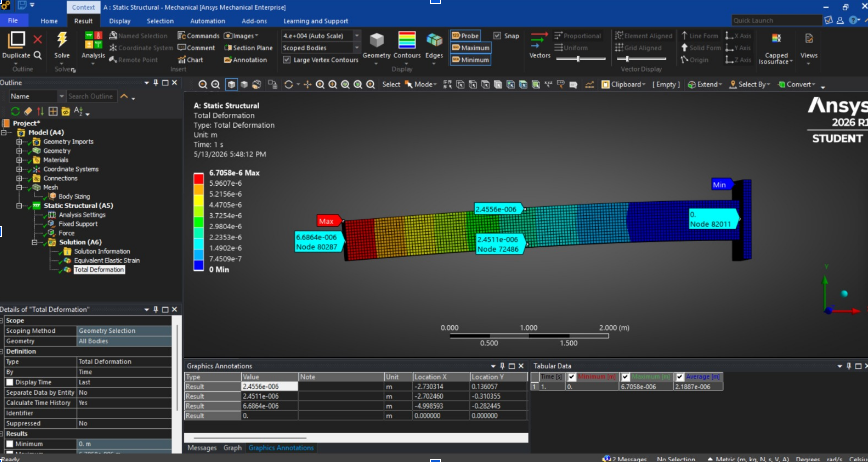
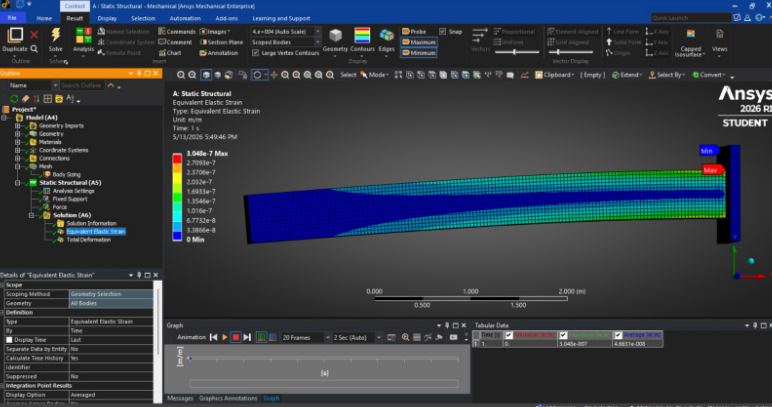
Static structural analysis is used to determine the response of a structure under applied static loading conditions. Parameters such as total deformation, equivalent stress, and equivalent strain are evaluated.
When damage such as a crack is introduced into a structure, the local stiffness decreases, leading to changes in stress and strain distribution. In this project, strain values obtained at selected locations on the beam act as virtual sensors. These virtual sensors help identify damage location by comparing strain variations between healthy and damaged beam models.
Modal Analysis
Modal analysis is used to study the dynamic characteristics of a structure, including its natural frequencies and mode shapes. Every structure has its own set of natural frequencies at which it tends to vibrate.
Damage in a structure reduces stiffness, which generally results in a decrease in natural frequencies. By comparing the modal properties of healthy and damaged beam models, the presence and location of damage can be identified.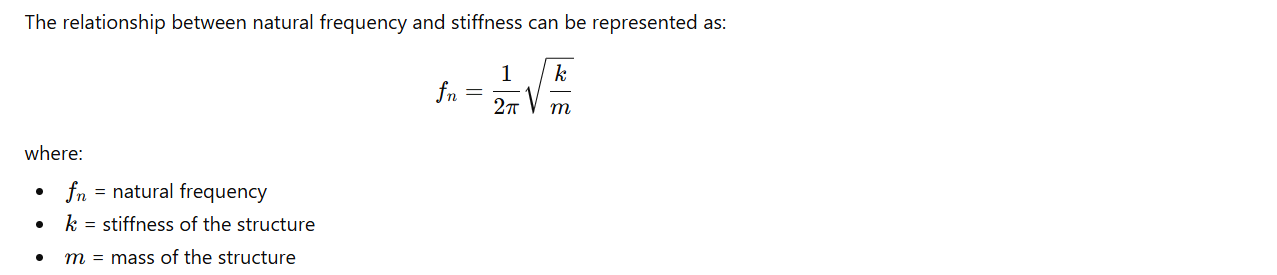
A reduction in stiffness due to cracks or defects causes a corresponding reduction in natural frequency.
.Methodology
1. CAD Modelling
A cantilever beam model is created using Autodesk Fusion 360. The beam geometry is designed with dimensions suitable for simulation and analysis. Multiple damaged models are then generated by introducing cracks at different locations:
Near the fixed end
At the mid-span
Near the free end
The crack size is kept constant for all cases to ensure consistent comparison.
2. Geometry Import and Meshing
The models are exported in STEP format and imported into ANSYS Workbench. Meshing is then performed to discretize the geometry into finite elements. A finer mesh is used near the crack regions to improve simulation accuracy and capture stress concentration effects effectively.
3. Material Properties and Boundary Conditions
Structural steel material properties are assigned to the beam model. Boundary conditions include:
Fixed support at one end of the beam
External load applied at the free end
These conditions simulate the behaviour of a cantilever beam under loading.
4. Static Structural Analysis
Static structural analysis is performed to evaluate:
Total deformation
Equivalent stress
Equivalent strain
Strain values are extracted from selected locations along the beam, which act as virtual sensors. The results from healthy and damaged beams are compared to study the effect of crack location on structural response.
5. Modal Analysis
Modal analysis is conducted to determine:
Natural frequencies
Mode shapes
The modal properties of healthy and damaged beam models are compared to identify reductions in stiffness caused by cracks.
6. Data Interpretation
The simulation results obtained from static and modal analyses are interpreted to detect and localize structural damage. Variations in strain distribution and frequency reduction are analyzed to understand the influence of damage position on the beam behaviour.
Geometry and Model
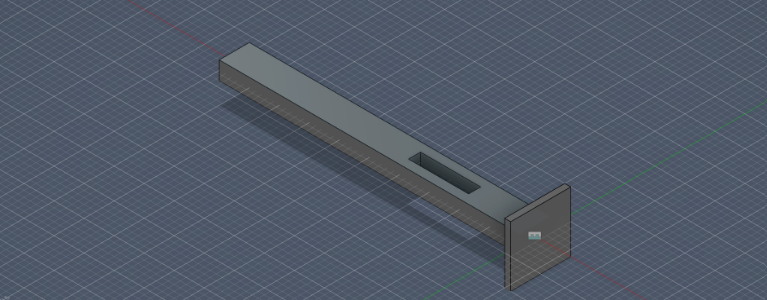
Fusion models of cantilever beam ( 5 cases)
i) case i : uncut beam
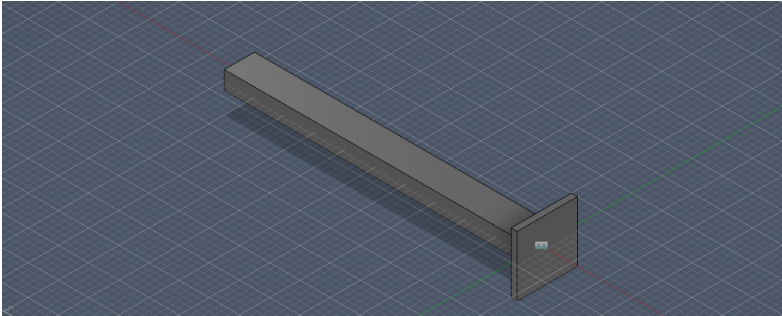
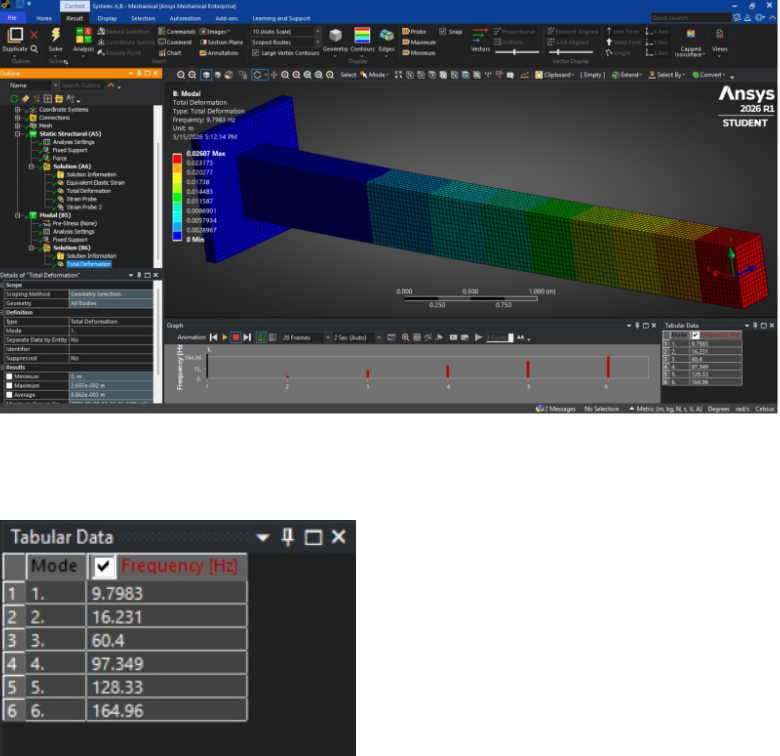
ii) case 2 : beam with 2mm wide x 10mm deep cut 10mm from fixed support
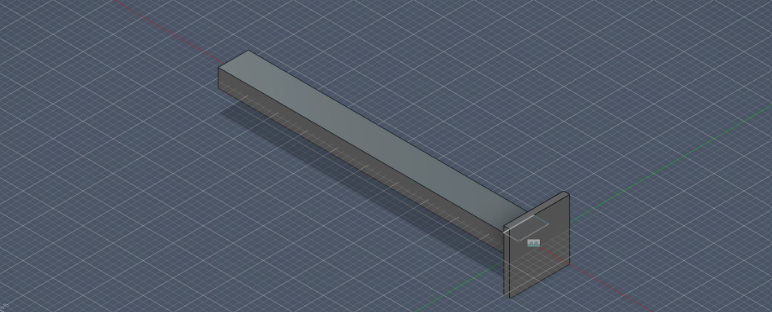
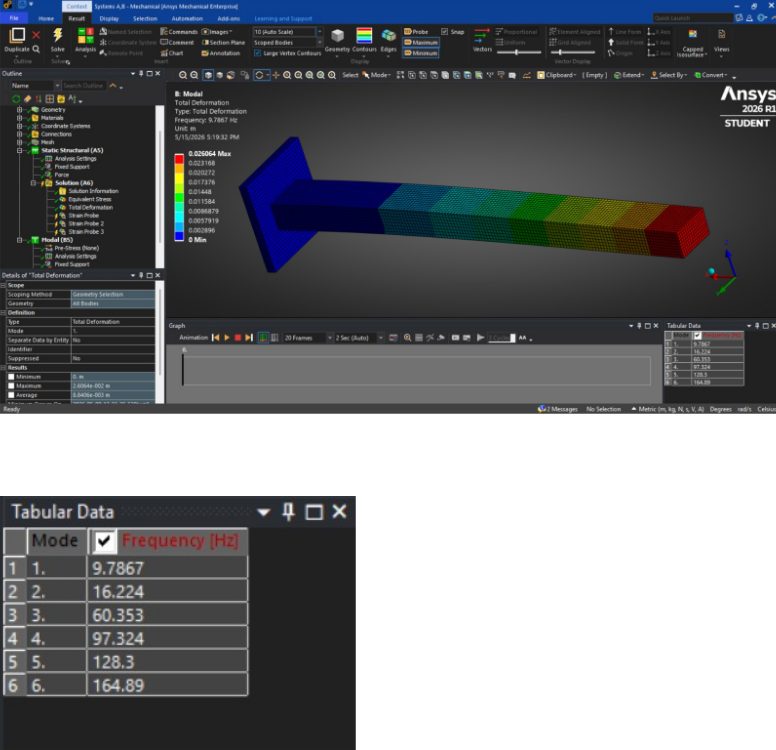
iii) case 3 : beam with 2mm wide x 10mm deep cut 25mm from fixed support
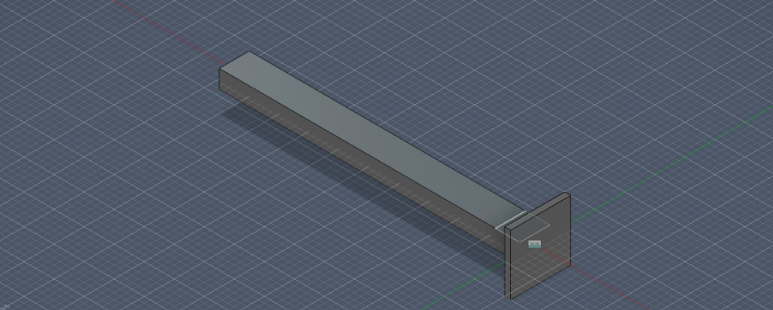
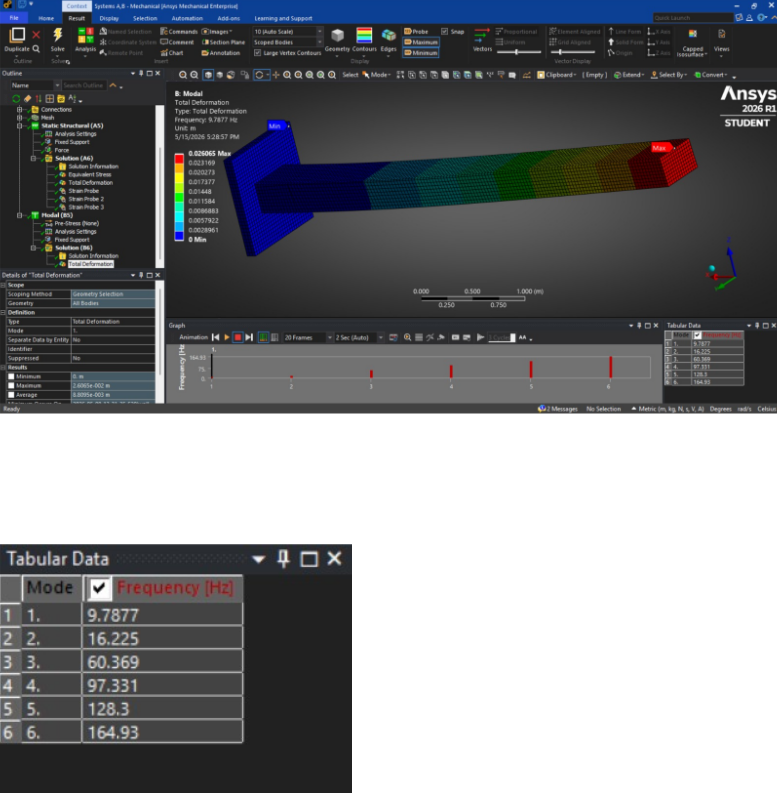
iv) case 4 : beam with 2mm wide x 10mm deep cut 40 mm from fixed support
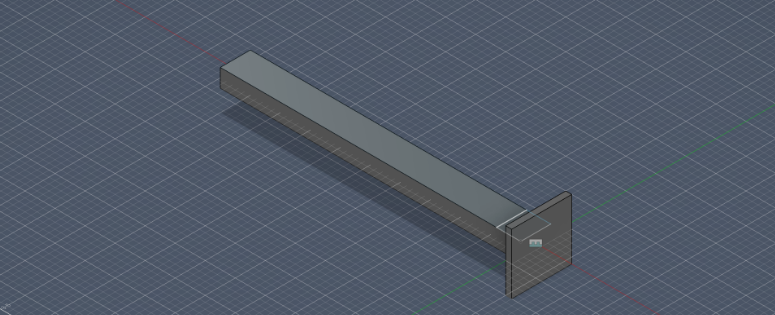
v) case 5 : beam with hole
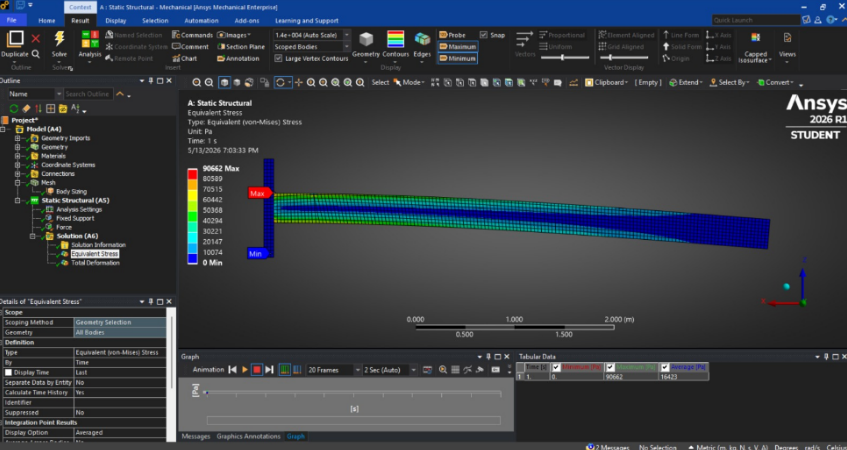
Static structure analysis
case i)
case ii)
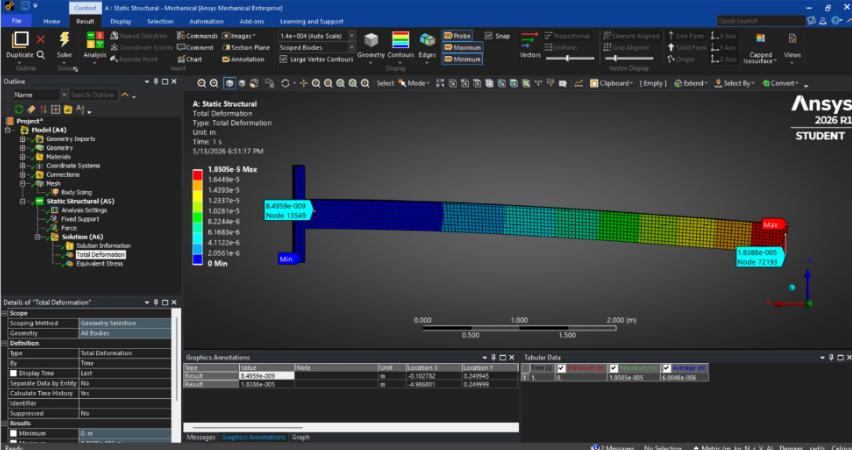
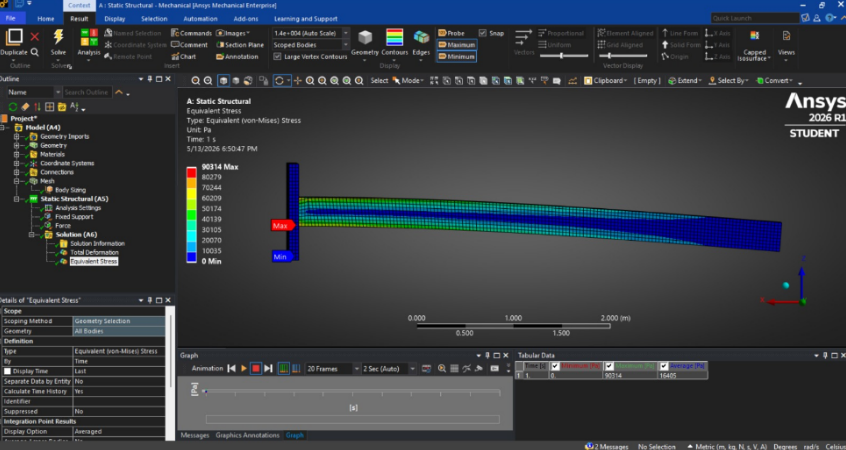
case iii)
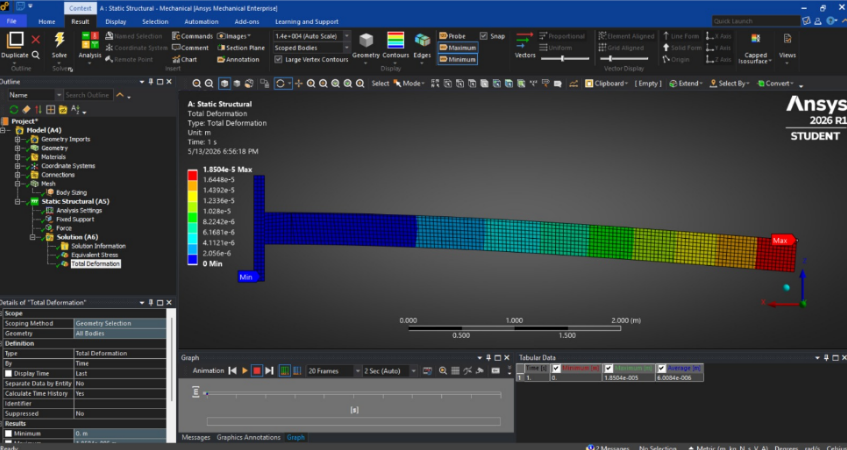
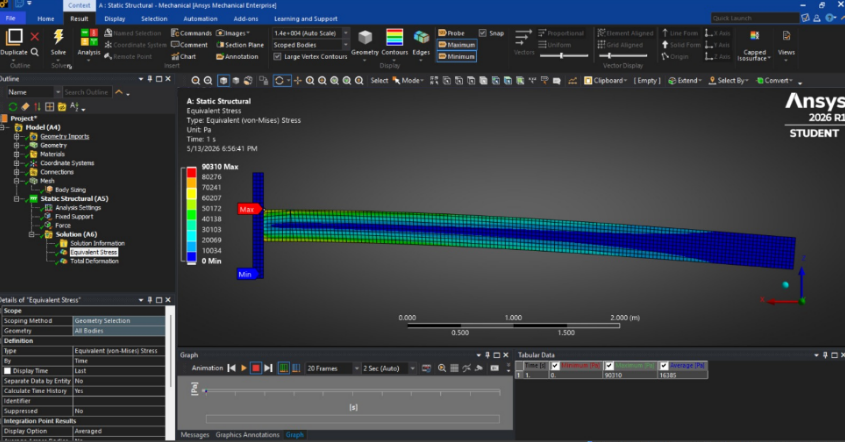 case iv)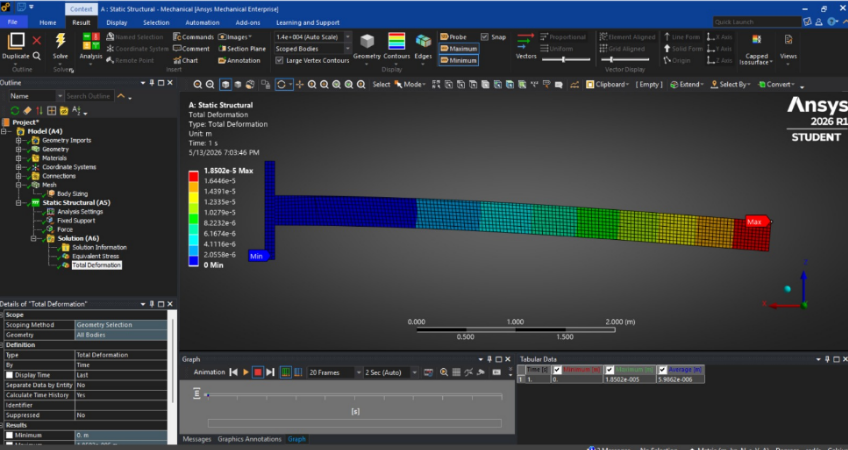
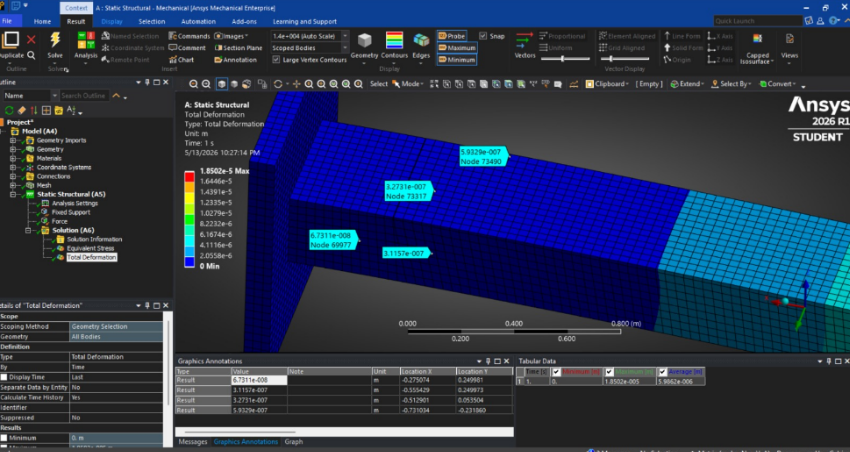
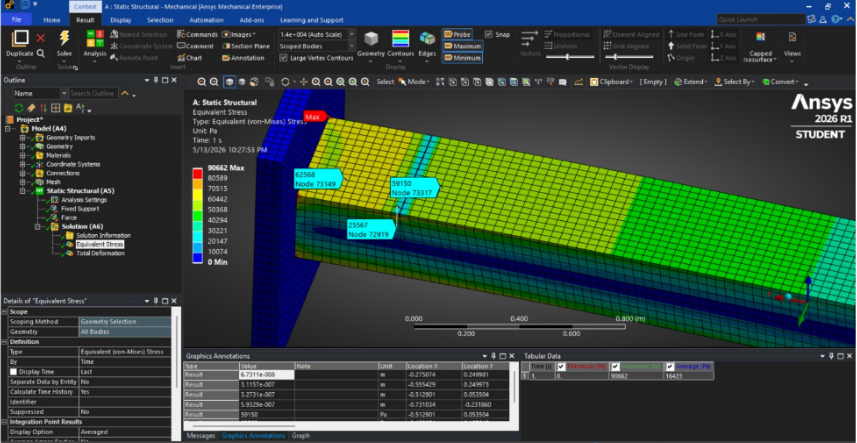
case v)
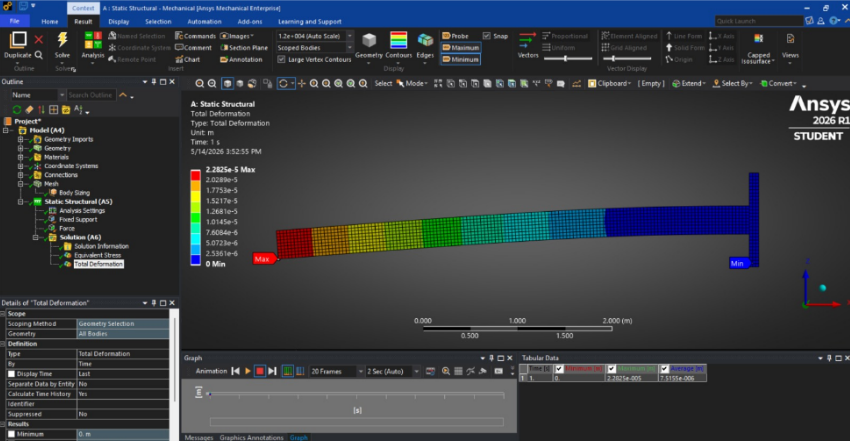
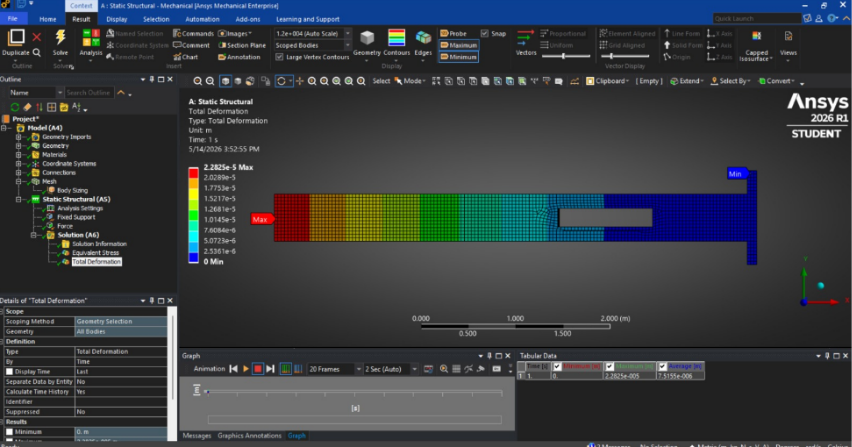
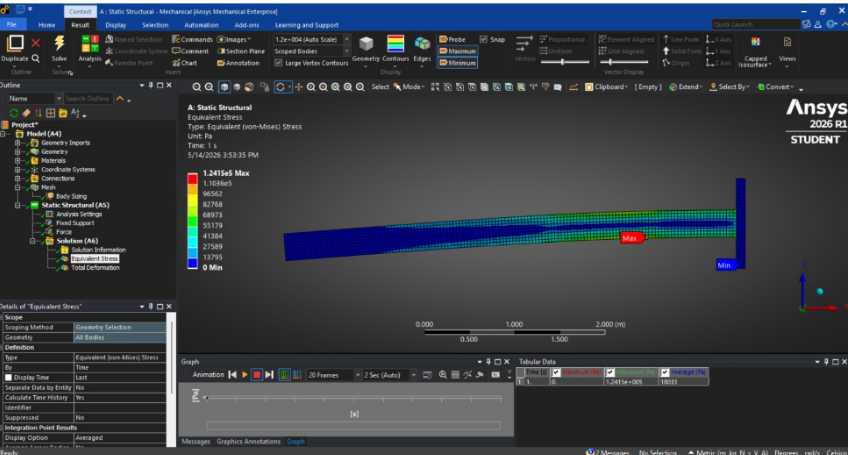
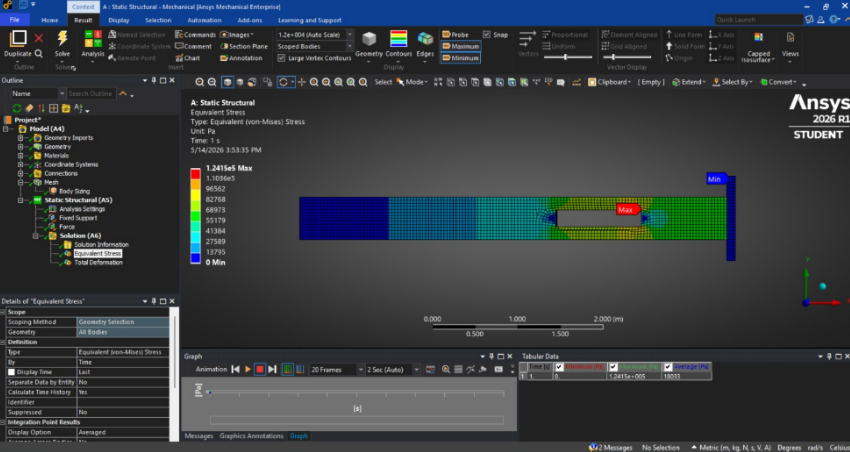
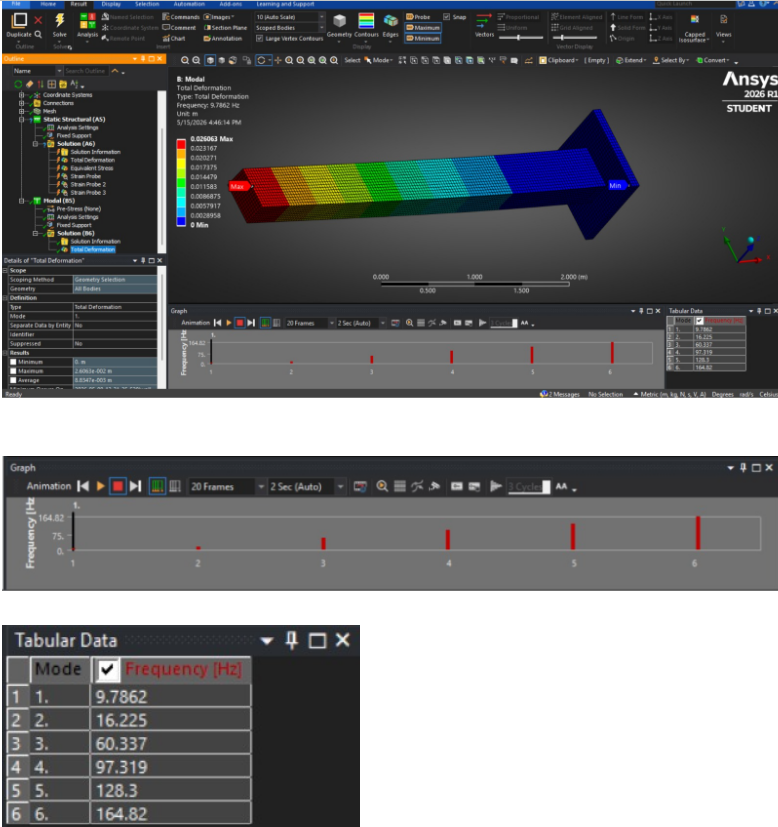
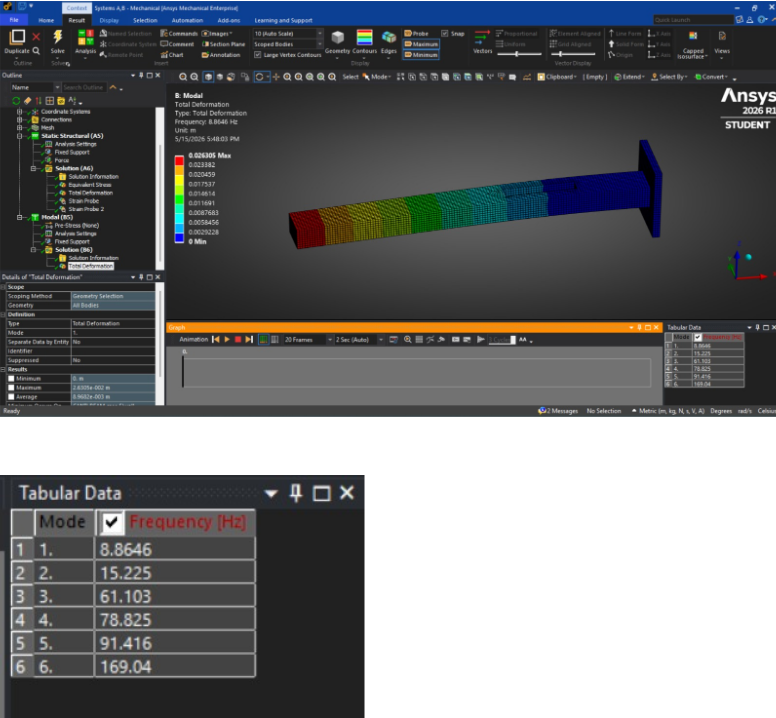
Modal analysis
Case i) (uncut)
case ii)
case iii)
case iv)
case v)
Conclusion
The Structural Health Monitoring (SHM) analysis conducted on the cantilever beam successfully demonstrated the effectiveness of using virtual sensors and finite element analysis for damage detection and assessment. By comparing the healthy beam with the different damaged cases, significant variations were observed in stress distribution, strain values, deformation, and natural frequencies. The static structural analysis showed that cracks introduced near the fixed support produced higher stress concentration and deformation due to the larger bending moment in that region, while damages located farther from the fixed end showed comparatively lower effects on the structural response. Similarly, the modal analysis indicated a reduction in natural frequencies for all damaged cases, confirming that structural damage decreases the stiffness of the beam. Among all cases, the beam with damage closest to the fixed support exhibited the maximum reduction in stiffness and the greatest change in vibration characteristics. The virtual sensor network effectively captured strain variations at selected locations and successfully identified the presence and severity of damage. Overall, the results proved that combining CAD modelling, FEM simulation, static structural analysis, and modal analysis provides a reliable, economical, and efficient approach for structural health monitoring and damage localization in engineering structures
References
https://www.ansys.com/products/ansys-workbench
https://help.autodesk.com/view/fusion360/ENU/
https://www.pearson.com/en-ca/subject-catalog/p/engineering-vibration/P200000003490?
Report Information
Report Details
Created: May 19, 2026, 12:35 a.m.
Approved by: None
Approval date: None
Report Details
Created: May 19, 2026, 12:35 a.m.
Approved by: None
Approval date: None